
You should Spend About 20 minutes on Questions 1-13, which are based on reading passage.
A) This scientific article delves into the fascinating world of fish life on Earth, examining the immense diversity and ecological significance of these aquatic organisms. We explore the various habitats fish inhabit, their evolutionary adaptations, and their critical roles within aquatic ecosystems. Through this study, we aim to highlight the importance of preserving fish biodiversity for the well-being of both the natural environment and human societies.
B) Fish constitute a diverse group of vertebrates that occupy a vast array of aquatic environments, ranging from freshwater lakes and rivers to the depths of the ocean. With over 34,000 known species, they represent a significant portion of vertebrate biodiversity on Earth. Fish have been present for more than 500 million years, and their evolutionary history has led to remarkable adaptations. This article aims to provide a comprehensive overview of fish life, focusing on their ecological roles, distribution, and conservation challenges.
C) The evolution of fish has led to remarkable adaptations to suit their environments. Their varied body shapes, fin configurations, and specialized physiological features enable them to thrive in different habitats. For example, the streamlined bodies of tuna facilitate rapid swimming, while the unique breathing structures of lungfish enable them to endure prolonged droughts. Additionally, fish display a diverse range of reproductive strategies, from external fertilization in most bony fish to internal fertilization in certain species of sharks and rays.
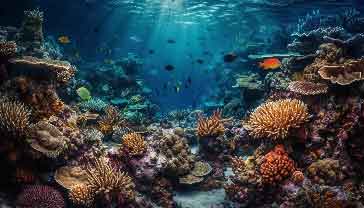
D) Fish are found in virtually every aquatic ecosystem on Earth, from the icy waters of the Arctic to the tropical reefs of the Indo-Pacific. Freshwater habitats, such as rivers, lakes, and ponds, harbor a significant number of species, with certain regions like the Amazon and Congo River basins boasting unparalleled fish biodiversity. In marine ecosystems, coral reefs are particularly rich in fish species, providing crucial nursery grounds and shelter for numerous marine organisms.
E) Fish play essential roles in aquatic food webs, acting as both predators and prey. Many species control populations of smaller organisms, preventing overpopulation of certain prey species. Moreover, some fish species engage in symbiotic relationships, such as cleaner fish removing parasites from larger marine animals. Their migrations across vast distances also transport nutrients between ecosystems, contributing to the overall health of the planet’s aquatic environments.
F) Humans have relied on fish as a primary food source for thousands of years, providing sustenance and livelihoods for countless communities worldwide. However, overfishing, habitat destruction, and pollution pose significant threats to fish populations. Destructive fishing practices, such as trawling and blast fishing, not only deplete fish populations but also damage delicate marine ecosystems. Additionally, climate change has led to warming oceans and ocean acidification, affecting fish behavior and distribution.
G) To preserve fish biodiversity and maintain the ecological balance of aquatic ecosystems, comprehensive conservation measures are essential. Initiatives such as establishing marine protected areas, implementing sustainable fishing practices, and promoting habitat restoration play vital roles in safeguarding fish populations. International collaborations and policies are required to address transboundary challenges and ensure the sustainable use of fish resources.
H) Fish life in the world showcases the extraordinary adaptability and diversity of aquatic organisms. As integral components of aquatic ecosystems, fish contribute to the stability and functioning of these fragile environments. Understanding and appreciating the significance of fish biodiversity can drive us towards effective conservation strategies, fostering a harmonious coexistence between humans and the underwater world. By safeguarding fish populations and their habitats, we can strive towards a sustainable future for both fish and humanity.